
Grand Island Resident Lookup Records
A one-person search works best when the source matches the question. Hall County parcel data can connect a named owner to a parcel and legal description. Nebraska Voter Check returns current registration information, not a broad directory. JUSTICE is the court route, and Nebraska DHHS controls certificates and older family-history access. A license or business record may confirm a credential or filing, but it does not establish that someone lives in Grand Island.
| Record source | Useful confirmation | Grand Island route | Access condition |
|---|---|---|---|
| Parcel and assessor data | Parcel ID, situs, legal description, owner text | Hall County GIS and Assessor | Online search |
| Voter registration | Current name, address, party, polling site | Nebraska Voter Check | Current-registration lookup |
| Court index | Case number, parties, court, dates | Nebraska JUSTICE | One-time search or courthouse access |
| Vital records | Certificate information when eligibility is met | Nebraska DHHS Vital Records | Proper purpose, relationship, ID rules |
| License record | License status or credential fields | Nebraska HHS License Search | Public search, limited purpose |
Start with the most specific fact available. An exact address belongs in the parcel workflow. A case number belongs in the court workflow. A date and family relationship may be necessary before asking DHHS for a certificate. That separation keeps a Grand Island resident lookup from turning a loose name match into a claim about a person.
Confirming a Grand Island Resident
Use two or more dated records to test whether the same person is involved. The GIS popup can provide a parcel ID, situs, legal description, current-owner text, coordinates, and area. Its owner field is a source string, not a verified identity. The Assessor search supports parcel, legal, name, and address searches, plus sale-date, price, property-type, status, and lot-size filters. It has no ZIP filter.
- Validate the exact address with USPS, then locate it in Hall County/Grand Island GIS and record the parcel ID, situs, legal description, and access date.
- Compare that parcel with the Hall County Assessor result. Treat a different mailing or owner string as a possible timing difference, not a conclusion.
- Search the Register of Deeds by the legal description when recorded ownership needs confirmation. The office says legal-description searching is preferable when a name is ambiguous.
- For a court lead, keep the court and case number with the party name. Request a certificate only from the custodian when an official copy is required.
- Docket
- A court case’s running list of filings, hearings, actions, and dates.
- Index and image
- An index points to a record; an image is the scanned document or public case document itself.
- Certified copy
- A custodian-issued copy authenticated for the purpose for which it is requested.
Grand Island Resident Lookup in JUSTICE
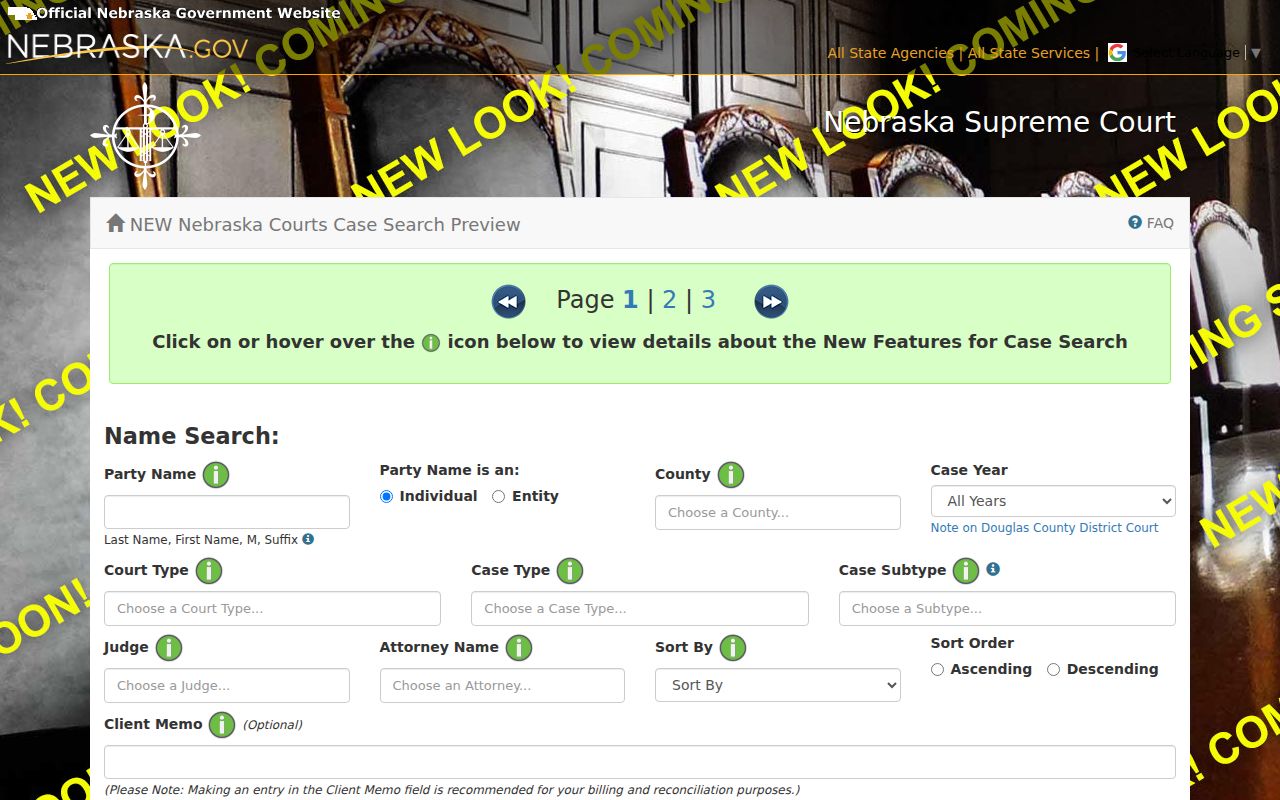
Nebraska JUSTICE covers county and district court matters, including criminal, civil, traffic, juvenile, and probate records. The one-time public search costs $17 for up to 30 public cases, even when the search has no result. Results remain available for three calendar days and online case information has a 24-hour lag. Use the narrowest known combination of party spelling, Hall County, court type, case type or subtype, year, judge, attorney, case number, and date fields.
The official JUSTICE search demonstration shows the field-oriented search screen used for this route.
A result can list the case summary, parties, attorneys, costs, register of actions, judge notes, and public images. It does not prove that every party with a similar name is the person sought. Hall County’s JUSTICE installation dates also matter: criminal and traffic began in May 1997, probate and adoption in August 1998, civil and small claims in January 2000, juvenile in August 2000, and district records in October 1997. Those dates describe database availability, not the start of the courts.
Grand Island Court Record Routes
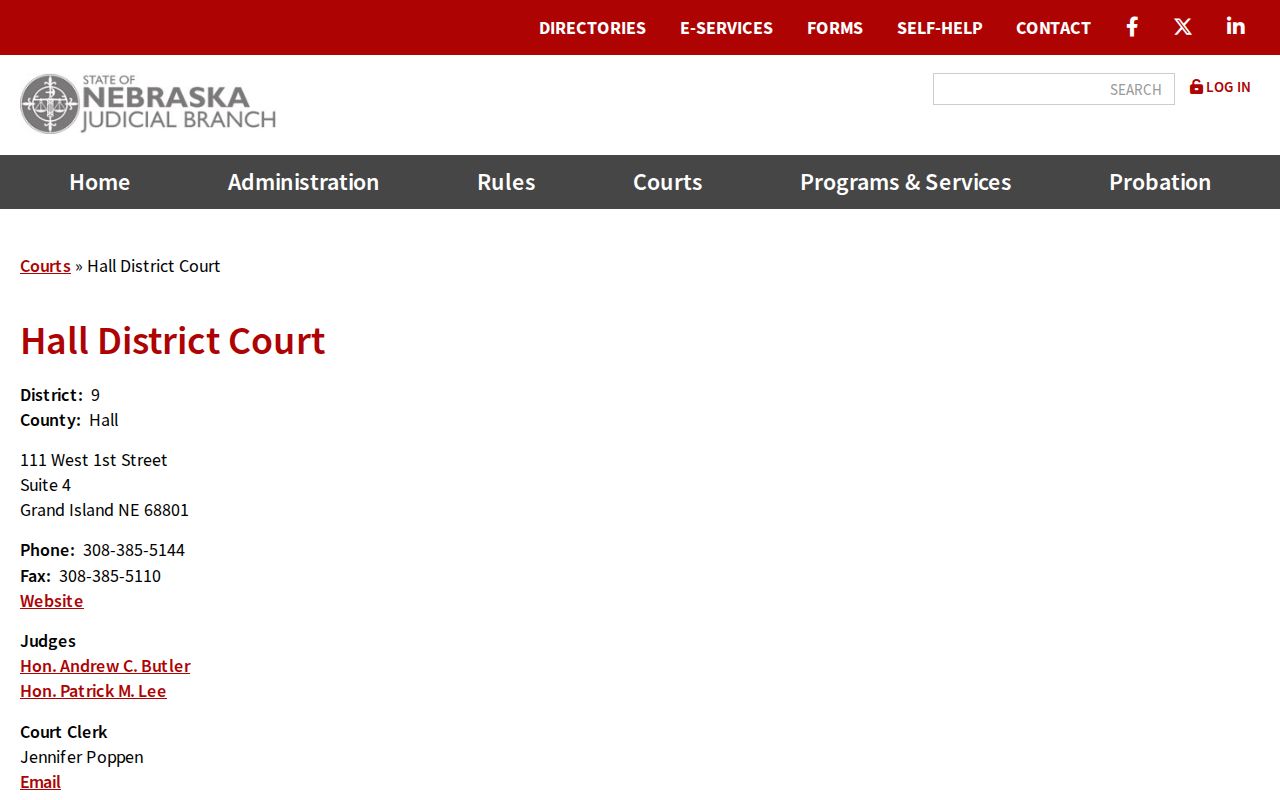
When online results are incomplete, Hall County’s local route includes County Court and traffic at 111 W 1st St, telephone 308-385-5135, and the District Court clerk at 111 W 1st St #1, telephone 308-385-5144. The local records page directs requesters to submit a clear written request. It also identifies courthouse terminals and law-library alternatives. No separate official Grand Island municipal-case portal was located in the research.
The Hall County District Court source shows the state judiciary route for local district matters.
For a federal matter, use PACER and the District of Nebraska rather than expecting a federal filing in JUSTICE. The research recorded a current PACER charge of ten cents per page, generally capped at three dollars per document, with a quarterly waiver at thirty dollars or less. Pricing is volatile and should be checked on the official service before use.
Grand Island License Lookup Fields
Nebraska HHS License Search has Individual, Business/Service, and Facility/Service tabs. The individual search exposes first and last name, license number, status, profession, license type, city, county, and ZIP fields. A first-name wildcard, shown as an asterisk, is accepted. The official inspection did not reveal all profession or license dropdown values, so it is better to follow the visible form labels than assume hidden options.
Use the Nebraska HHS license search for a credential question, not to establish a current residence.
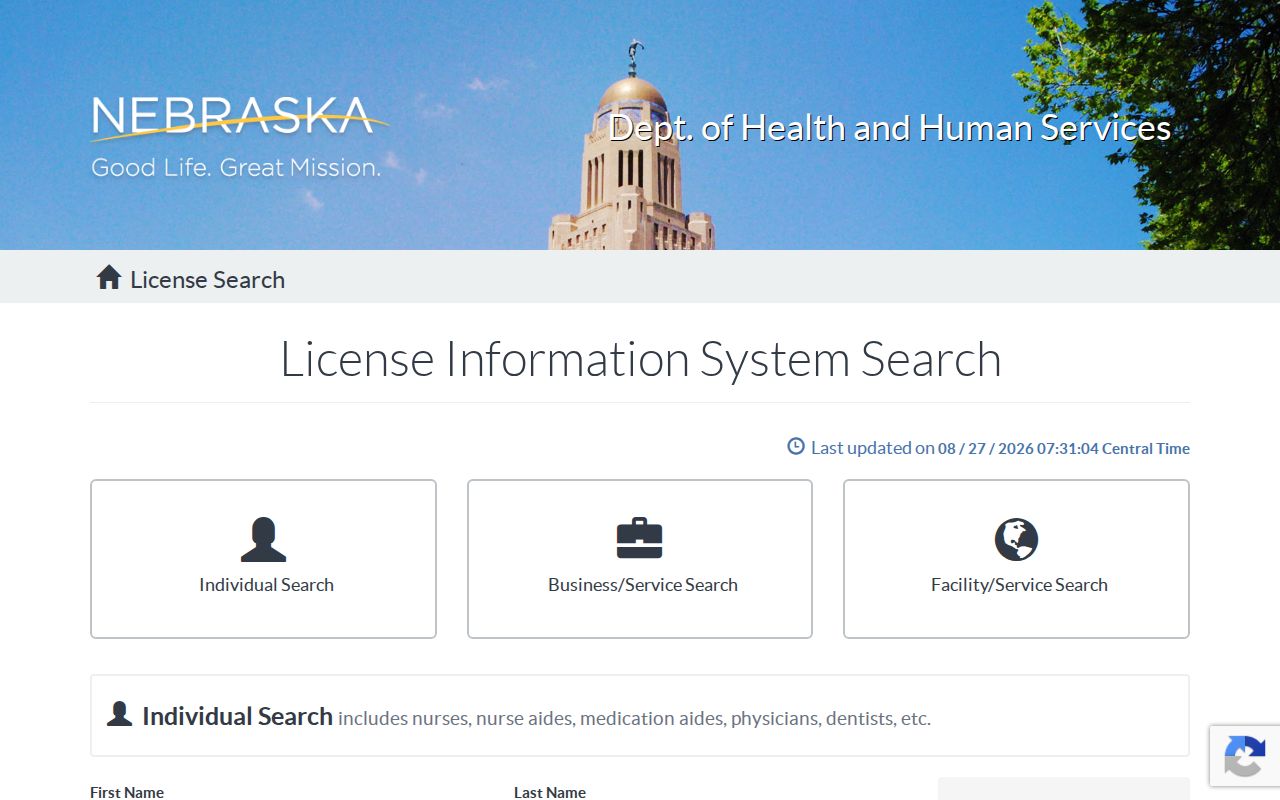
City, county, and ZIP are license-record filters. They are not proof that a named licensee currently resides at an address. Preserve the result type, search date, and the field actually returned before comparing it with a separate Grand Island resident lookup.
Grand Island Records Beyond a Name
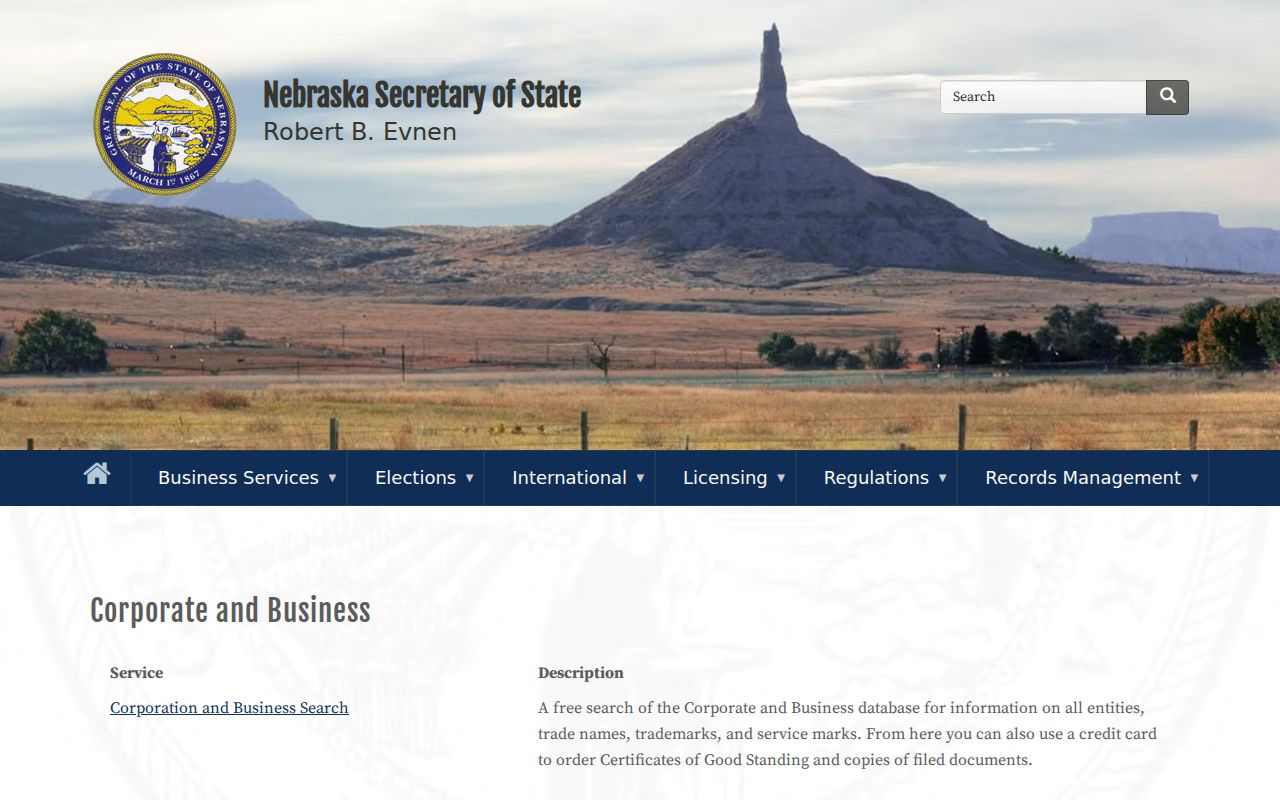
Nebraska’s business search covers entities, trade names, trademarks, and service marks. Basic information is free, while certificates and images are paid. Special requests may be scoped by entity type, date, keyword, location, or registered agent. An entity filing is useful context where a person’s name appears in a public business record, yet it does not show a current home address or establish a personal relationship.
The Secretary of State business-services page is the official starting point for that separate record family.
UCC records, tax liens, judgment liens, and financing statements have their own search rules. The state explains that a UCC search is not certified. Keep business or filing facts in their own category instead of folding them into a personal profile.
Grand Island Vital Record Limits
Nebraska DHHS maintains statewide birth, death, marriage, and divorce records. Applications require a proper purpose and, for another person’s record, proof of relationship and government photo identification. Fees can be retained when no record is found or the wrong person is requested. Birth records begin in 1904 and certificates are generally available from 1912; 1904 through 1911 entries may be under the father’s name. State marriage and divorce records begin in 1909.
The official Nebraska State Patrol request route is a separate, fingerprint-based criminal-history channel, not a replacement for court or vital-record research.
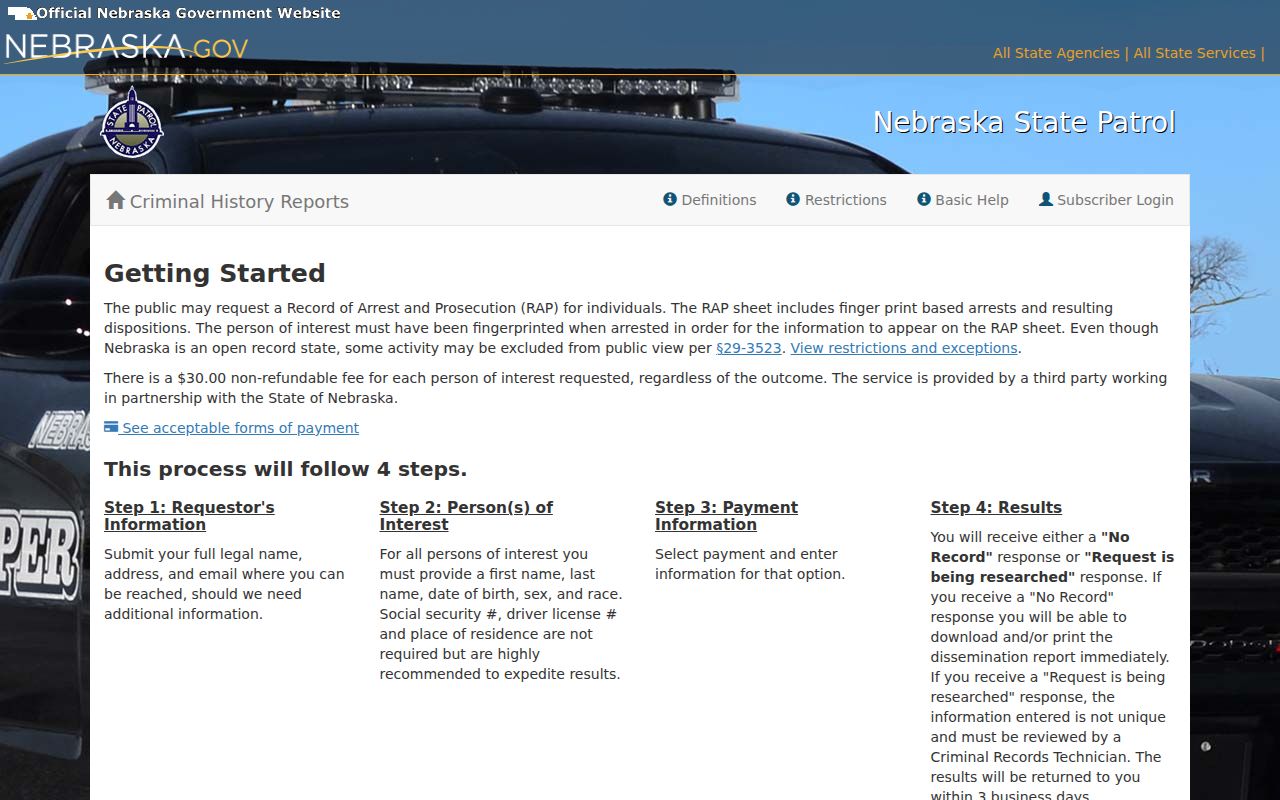
That request costs $30 per person, is non-refundable, and applies only where the person was fingerprinted. It is not a complete life-history substitute. For family history, DHHS identifies a deceased-person rule allowing release after at least 50 years under Title 174, Chapter 3, paragraph 3-004.06. It is not a broad rule for living people.
Grand Island Resident Lookup Alternatives
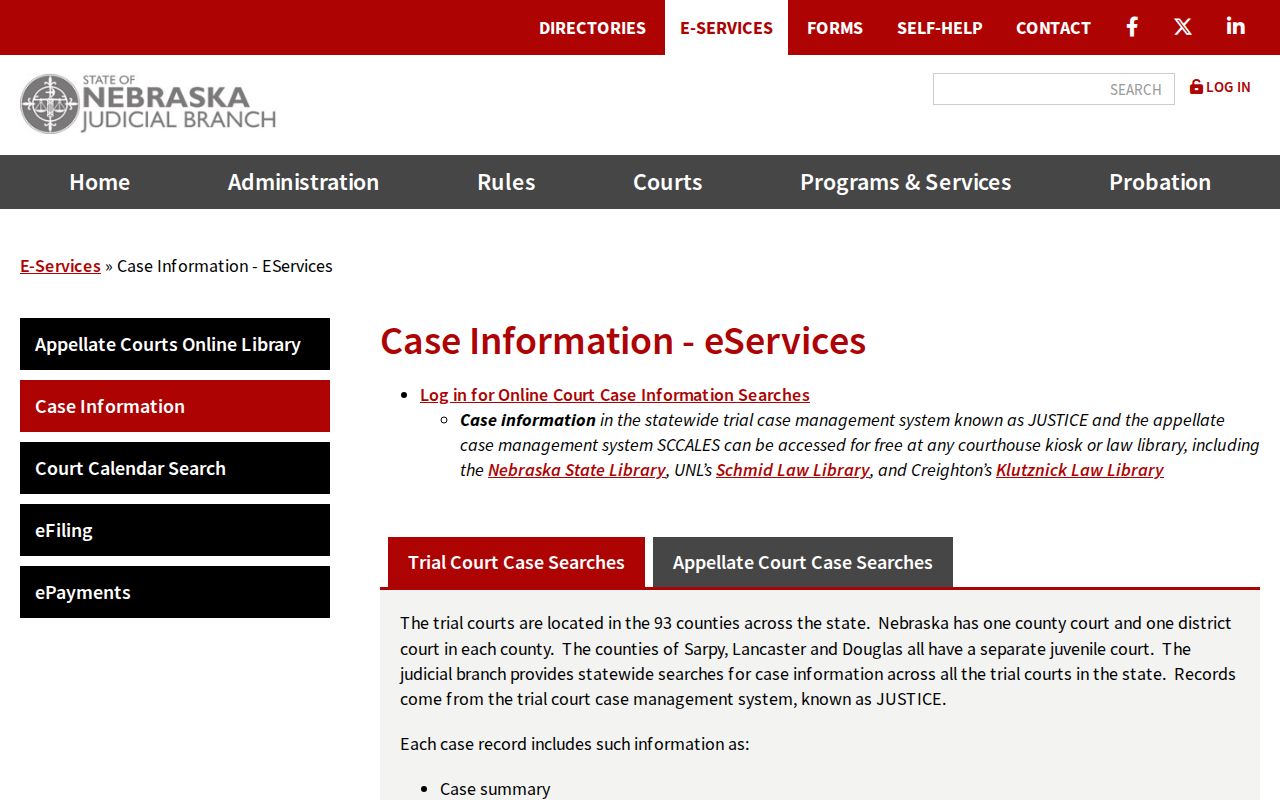
Online access is only one route. Nebraska Judicial Branch eServices describes trial-court access choices, while Hall County offers clerk and terminal routes. A public-record request to the right custodian should name the record, approximate date span, person or parcel identifier, and preferred format. Nebraska Attorney General guidance describes a general four-business-day response, estimate, or denial timeline, actual-cost principles, and a review path. Agencies do not have to create a new report or answer a newly framed research question.
The Nebraska Judicial Branch eServices page shows the court-system access options.
A useful request records the custodian, request date, record type, identifier, date span, search terms, inspection or copy preference, fee estimate, response date, and source URL. It also distinguishes an index from an image and states what was not checked.
Grand Island Resident Lookup Privacy
Nebraska public records are generally open unless a statute restricts them, but each record family has its own boundary. DMV data is subject to federal and state disclosure law. Vital records have purpose, relationship, and identification rules. Adoption information and Address Confidentiality Program information need extra care. The program provides eligible people who have moved for safety with a substitute mailing address and keeps the actual address confidential in public records.
Lawful use. A Grand Island resident lookup is for personal, lawful research, family history, estate questions, or verifying a source. Nebraska’s stalking statute, §28-311.03, covers willful harassment intended to injure, terrify, threaten, or intimidate.
When sources conflict, report the difference and contact the custodian. A GIS owner string, deed grantee, voter result, and newspaper mention can reflect different people or dates. Do not display sensitive identifiers, full birth dates, driver-license information, medical data, or unredacted adoption details.
A same-name result deserves a narrower check, not a broader search. In JUSTICE, compare party type, court, case number, case facts that are publicly visible, and the date before treating a record as relevant. In the parcel workflow, compare the legal description and parcel ID before comparing names. For a historical question, add a dated city-directory entry, census enumeration district, atlas plate, Sanborn sheet, or newspaper issue instead of replacing a current record with an old label. A negative result is also useful when it names the portal, the terms used, the access date, and the record system’s known limits.