
Finding Grand Island Resident Records
Grand Island does not keep one master list of everyone who lives here. Hall County and Nebraska custodians each maintain records for a different event. An address question usually begins with the parcel map and Assessor record. A past household question often needs a deed, an old directory, a census line, or a newspaper notice. A name-only result needs more care because the same surname can occur in several unrelated records. Treat each item as dated evidence, not a final answer about a person's present life.
Choose the first search by the detail already known. Exact street addresses work best in GIS and property records. A date and a family name work well in the Heritage Room's newspaper and directory resources. A court case number belongs in the judiciary system, while a certificate request belongs with DHHS. The Grand Island residents directory is most useful when it keeps those routes separate.
- Validate a current address with the USPS lookup, then open the Hall County/Grand Island parcel GIS to note the situs address, parcel ID, and legal description.
- Use the Hall County Assessor search to compare the parcel, owner text, and sale or property filters. Keep the access date with your notes.
- Search the Register of Deeds by its visible legal-description or instrument controls when a transfer, plat, or mortgage matters.
- For an earlier household, pair the relevant city-directory year with a census year, map sheet, or dated newspaper issue.
- Ask the named custodian for an existing record when the online index ends. A Nebraska Public Records Act request should state the record type, date range, and delivery format.
Note: A no-result screen means only that the checked index did not return a match on that date.
Grand Island Records Office Routes
Three Hall County offices do much of the local work behind a residents directory. The Assessor ties property data to a parcel. The Register of Deeds receives recorded land instruments. The Election Commissioner administers registration and polling information. They are close in location, but their records answer different questions. The county's archival series also extend beyond what a current portal shows, so a nineteenth- or early-twentieth-century question may need an archive request as well as a local office search.
Hall County Register of Deeds
200 S Sycamore St, Suite 6
Grand Island, NE 68801
308-385-5040
Hall County Assessor
200 S Sycamore St, Suite 1
Grand Island, NE 68801
308-385-5050
Hall County Election Commissioner
200 S Sycamore St, Suite 8
Grand Island, NE 68801
308-385-5085
The Register of Deeds and Assessor are separate offices. A parcel's owner text can help route a search, but the recorder's instrument record and a qualified title examination address title questions. The Election Commissioner has its own registration and list-use rules.
Grand Island Parcel Search Fields
The Hall County assessment form is a practical first pass when an address, owner spelling, or legal description is known. It offers text inputs for parcel number, legal text, name, and address. It also has property-location, sale-date, price-range, property-type, status, and lot-size controls. The page does not expose a ZIP field, export control, or a stated online coverage period. Its listed 1948 sale-year option is not proof that every local record begins in 1948.
| Hall County field | How it narrows a search | Important limit |
|---|---|---|
| Parcel # | Connects a known property to assessment data | Record coverage is not stated online |
| Legal Contains | Finds text from a subdivision, block, or legal description | Use the recorded instrument to confirm transfers |
| Name Contains | Tests an owner-name spelling | An owner string is not a verified identity match |
| Address Contains | Locates a situs address | There is no inspected ZIP filter |
| Sale and property filters | Narrows a property or sale set | Selector years are not a complete historical index claim |
The Hall County Assessor describes its work with market values, sales review, GIS, personal-property accounts, and exemptions. That is useful context for a Grand Island resident search, but it does not turn every assessment field into proof that a person currently resides at the parcel.
The Hall County Assessor office page identifies the local assessment and GIS route used alongside the search form.
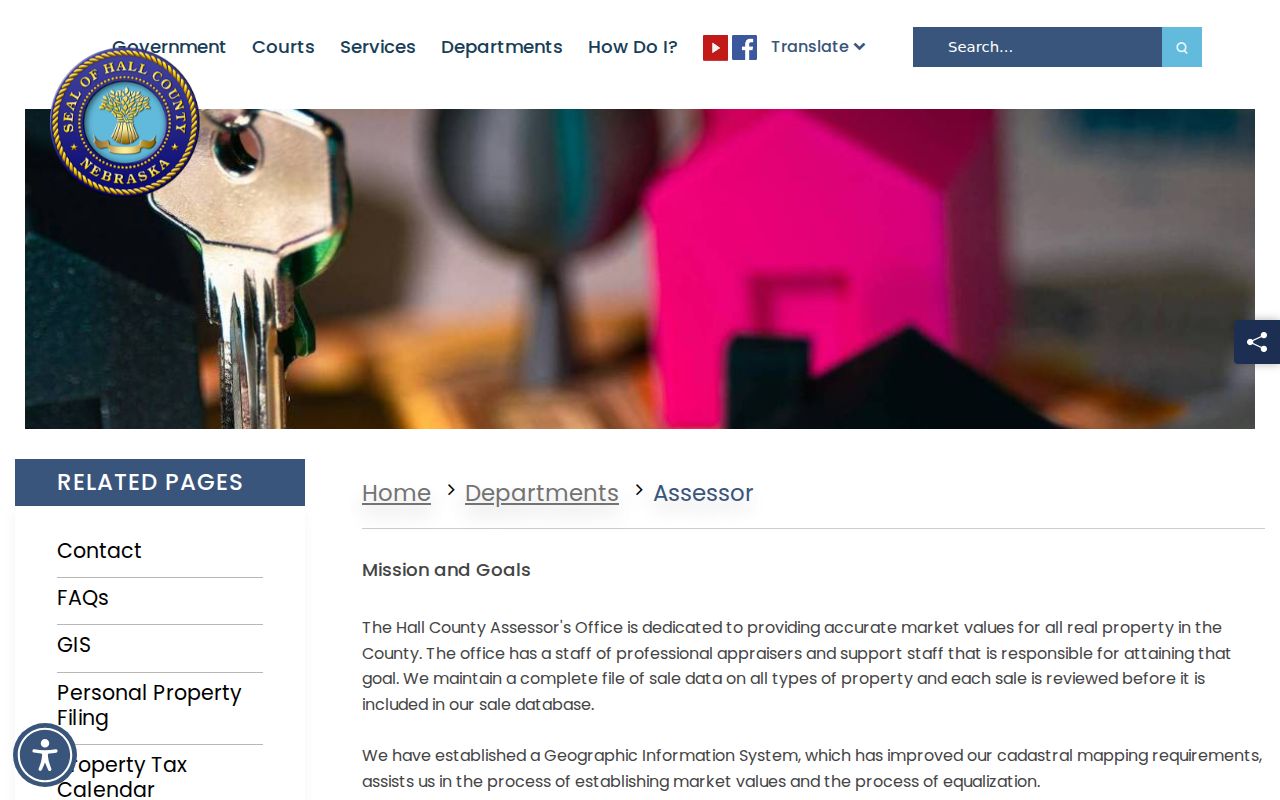
The office and the online search serve as starting points for parcel work; a recorded instrument is still needed when title or transfer details matter.
Note: Preserve the parcel ID and access date when linking a map result to a later deed search.
Grand Island Deed Index Trail
Recorded deeds, mortgages, liens, plats, reconveyances, and related instruments create an address history that is different from a list of residents. The Hall County Register of Deeds records these instruments and links its work to GIS. Searchers can use the Hall County instrument portal by visible name, index number, legal-description, subdivision, block, book/page, or section-township-range controls. When a name search is uncertain, the legal description is the safer bridge from the parcel record to the deed index.
The recorded-instrument search is shown below. It is the entry point for the document repository, not a title opinion. The legacy Hall County repository states that instruments are available from sequence 76000002 to current. That is an instrument-sequence notice, not a date range.
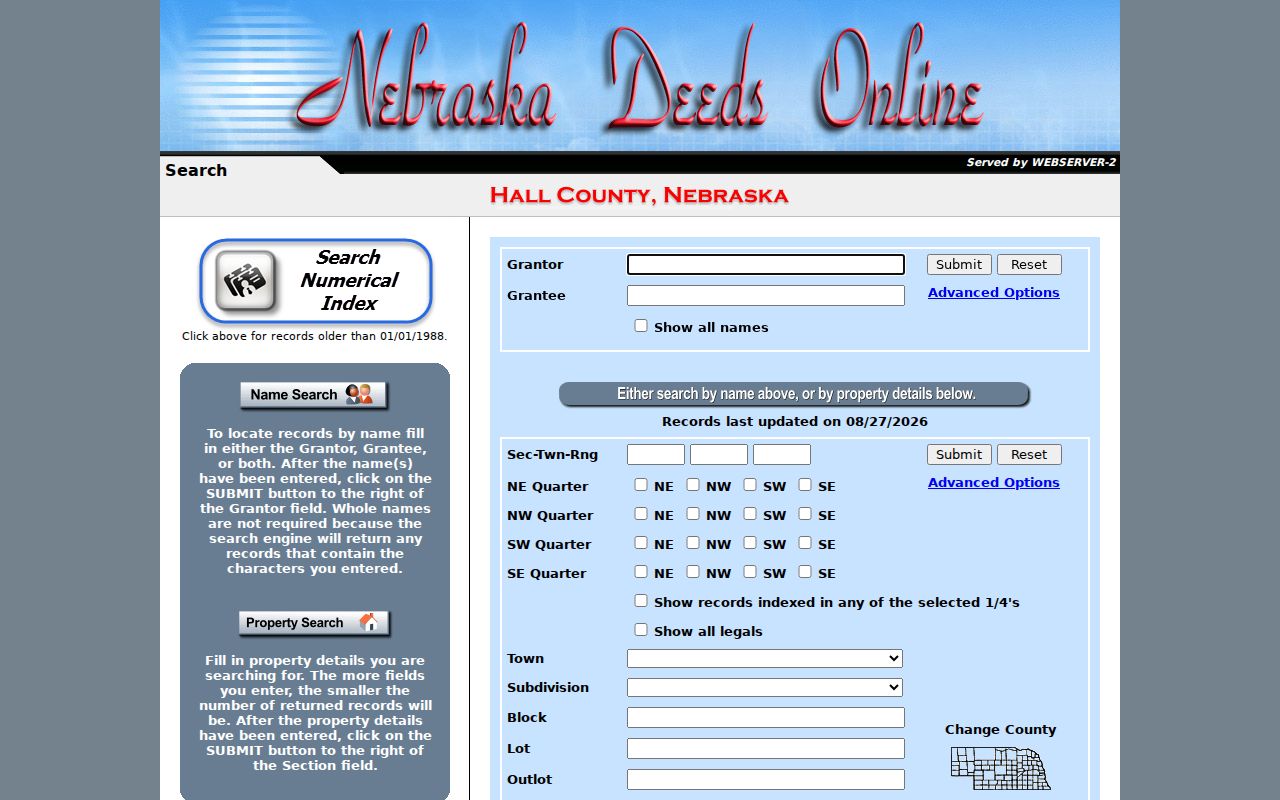
Record the instrument number, recording date, document type, grantor, grantee, legal description, book/page or image identifier, and image status. The office FAQ lists copies at $0.20 a page and certified copies at $1.50 a page; it also directs title clarity questions to an examiner or abstractor.
Current Grand Island Resident Sources
Current sources in a Grand Island residents directory should be read for their narrow role. Parcel records speak to property and assessment. Voter Check supplies current registration information. The deed index identifies parties to recorded instruments. City, chamber, and association pages serve different civic or member purposes and should not be treated as household rosters. A source may identify one part of a record trail without proving a present address or relationship.
| Source | What it can establish | Custodian or keeper | Access route |
|---|---|---|---|
| Assessment and parcel record | Parcel, situs, property and current-owner text | Hall County Assessor and GIS | Free county search and map |
| Current registration check | Current registration, address, party, polling site | Hall County Election Commissioner | Nebraska Voter Check |
| Recorded instrument index | Named parties and land-document trail | Hall County Register of Deeds | Online index and office copies |
| Chamber organization directory | Participating businesses and organizations | Grand Island Chamber | Member directory |
| Public association page | Mission and public contact information | Named association | Organization page |
For one person whose name must be compared across official sources, use the more focused Grand Island resident lookup route. It keeps court, vital, and record-specific limits in view.
Grand Island Voter Access Rules
Nebraska Voter Check is for current registration and polling information. Hall County says the returned information includes the current name, address, party affiliation, and polling site. It is not a general historic people list. The live tool's exact form fields and export behavior were not safely observed, so those controls should not be assumed. The local election office reports 24 precincts and has separate routes for registration applications and election questions.
A statewide voter file is a different, restricted product. The Secretary of State lists a $500 file, annual affidavit and fee, permitted-use limits, and an anti-posting rule. Hall County also describes a candidate and campaign list request with an oath and advance notice. Those access paths do not authorize public copying of names or addresses into a broad residents directory.
Grand Island Court Record Checks
When a name is tied to a specific Hall County case question, Nebraska JUSTICE is the state trial-court route. A one-time search costs $17, returns up to 30 public cases, and remains available for three calendar days. Online information has a 24-hour lag. Narrow the query with the available county, court type, year, case type, and close party spelling before reading a result. Hall County installation dates also matter: criminal and traffic begin in JUSTICE in May 1997, probate and adoption in August 1998, civil and small claims in January 2000, juvenile in August 2000, and district cases in October 1997.
Nebraska's one-time JUSTICE search displays the agreement and search route. A docket may identify the court, case number, parties, register actions, and, where public, images. It does not establish that every same-name hit concerns the person sought.
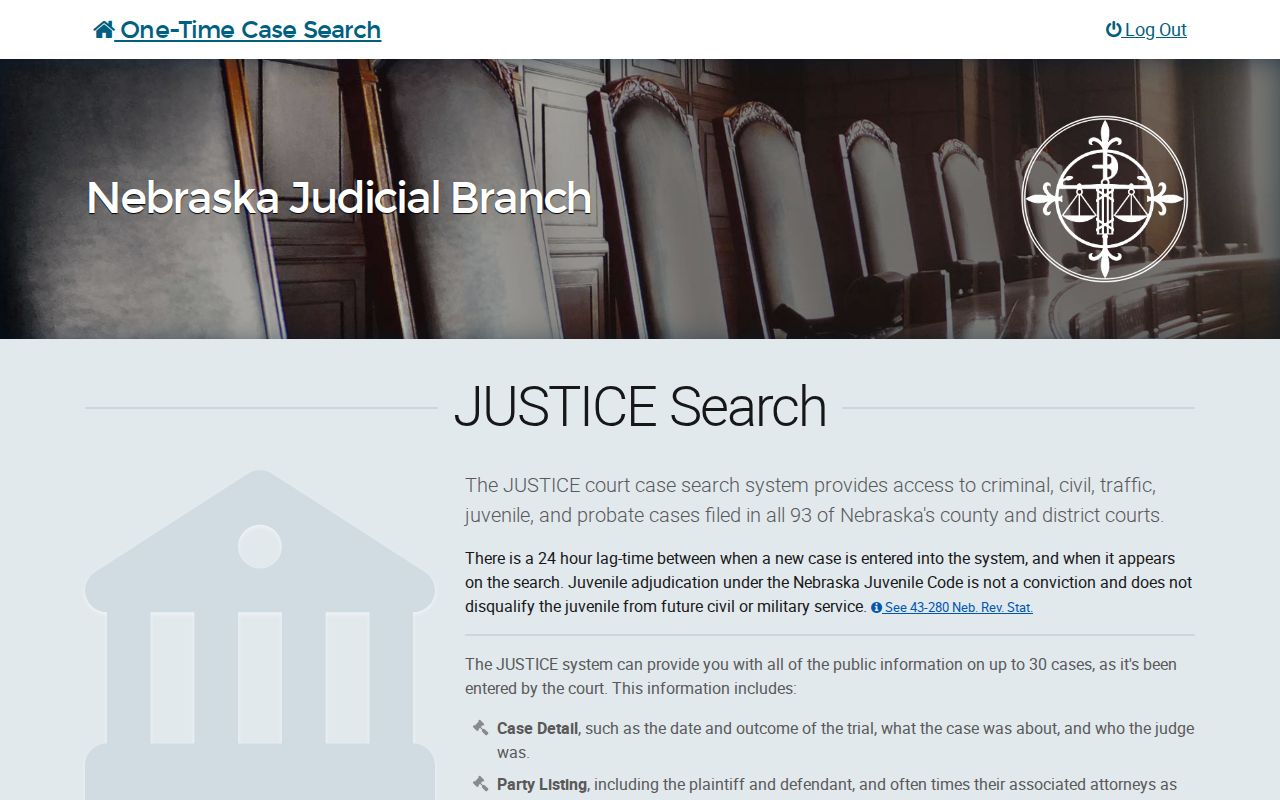
Federal matters belong in PACER and the District of Nebraska, not JUSTICE. Direct case-number access is more efficient than an open-ended name search, and federal pricing should be checked before use because it can change.
Grand Island Vital Record Limits
Nebraska DHHS holds statewide birth, death, marriage, and divorce certificates. Those are not ordinary name-search results. The office requires a proper purpose and often relationship proof and government photo identification for another person's certificate. A retained search fee can apply even when no record is found. The application route differs by certificate type, and a divorce certificate is not the complete court file.
Nebraska Vital Records explains its online and mail routes for current certificates. For genealogy, the official family-history page allows release when the registrant has been deceased at least 50 years under the cited regulation. Birth records begin in 1904, certificates are generally available from 1912, and marriage and divorce state records begin in 1909. Those dates do not create a blanket rule for every historical document.
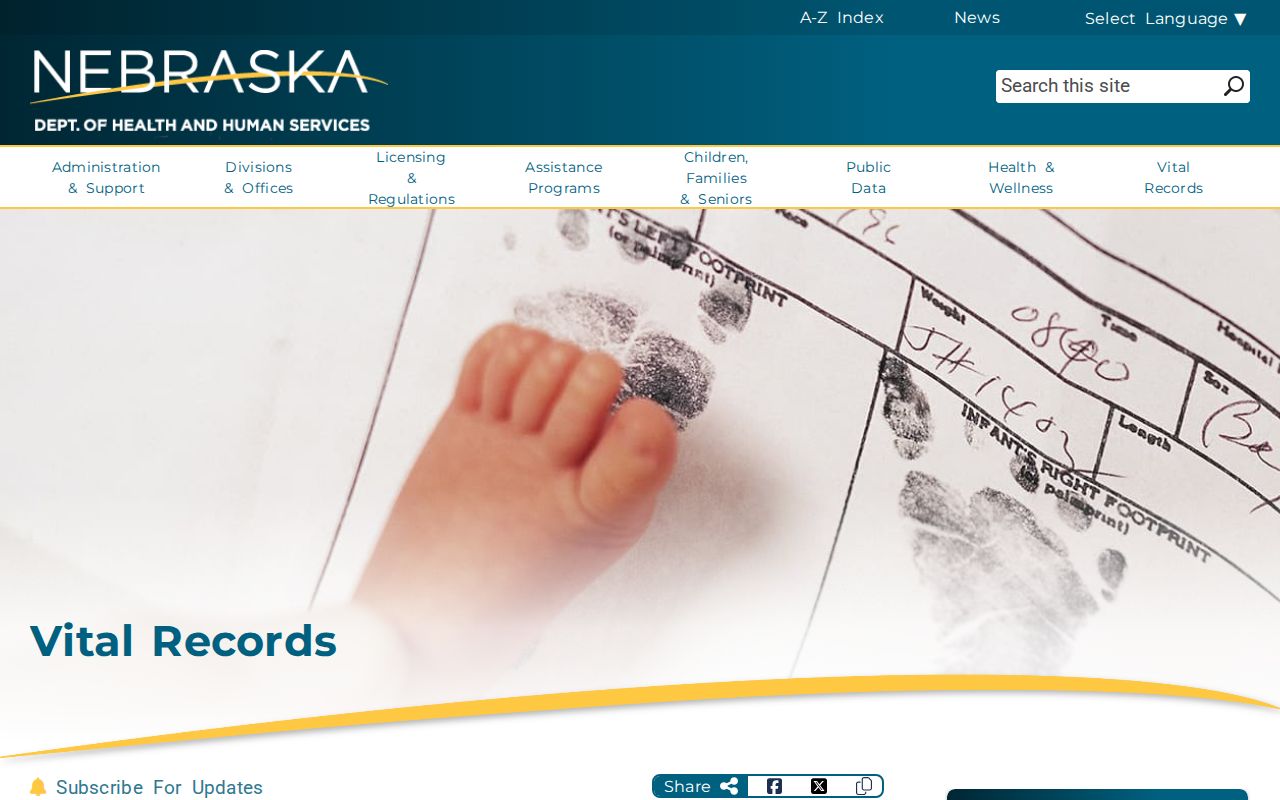
Older county ledgers and archive material may supply a better historical lead. Keep certificate eligibility, adoption information, and any protected details out of public notes.
Grand Island Privacy Boundaries
Public availability is not the same as unrestricted use. Nebraska's Address Confidentiality Program gives eligible survivors of domestic violence, sexual assault, or stalking a substitute mailing address and protects the actual address in public records. Applications go through designated victim-assistance centers rather than directly to the Secretary of State. Driver records are also restricted under the federal DPPA and Nebraska's disclosure law.
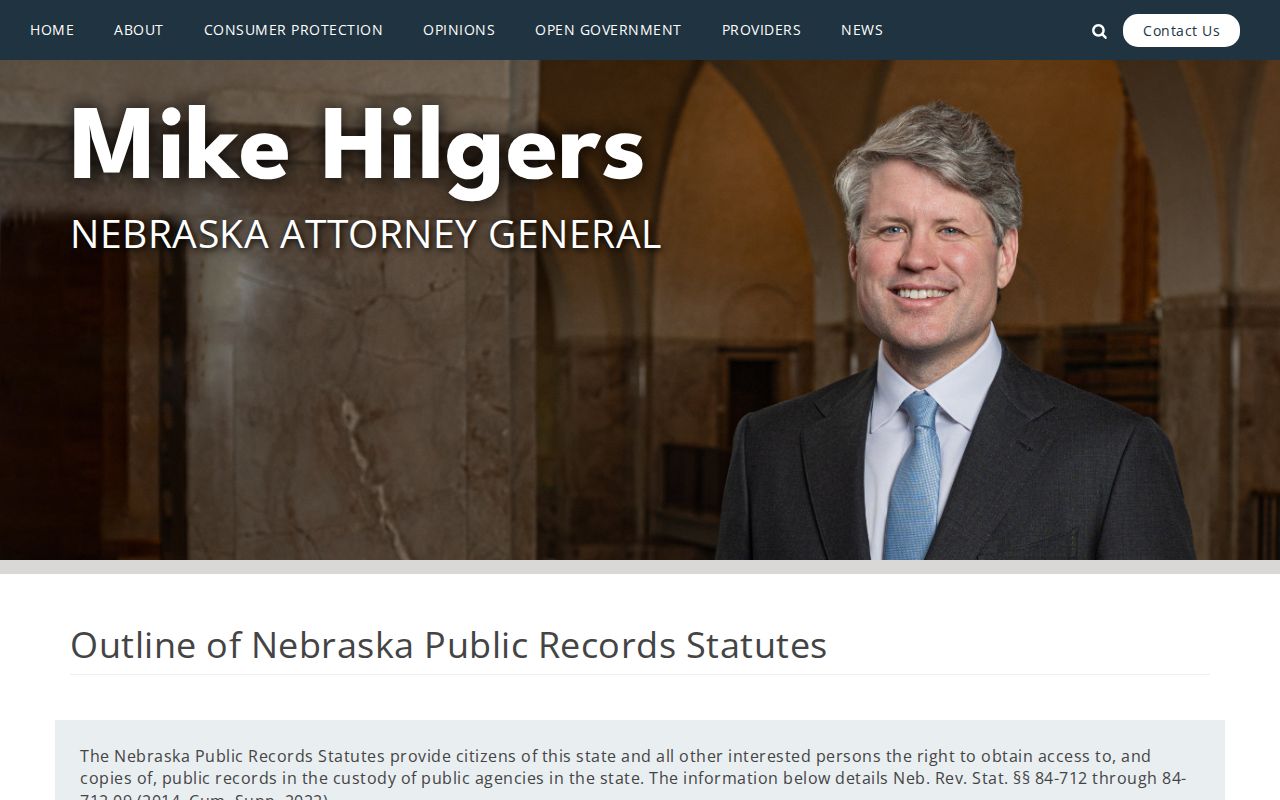
The Nebraska Attorney General's public-records guidance describes a normal response, estimate, or denial path within four business days, actual-cost principles, deposits in some cases, and review of a denial. A request should ask for an existing record and name the custodian, date span, and format. Agencies do not have to create a new index or answer a research question in a new form.
Note: Never republish sensitive identifiers, protected addresses, medical information, or unredacted adoption details from a source.
Grand Island Heritage Room Sources
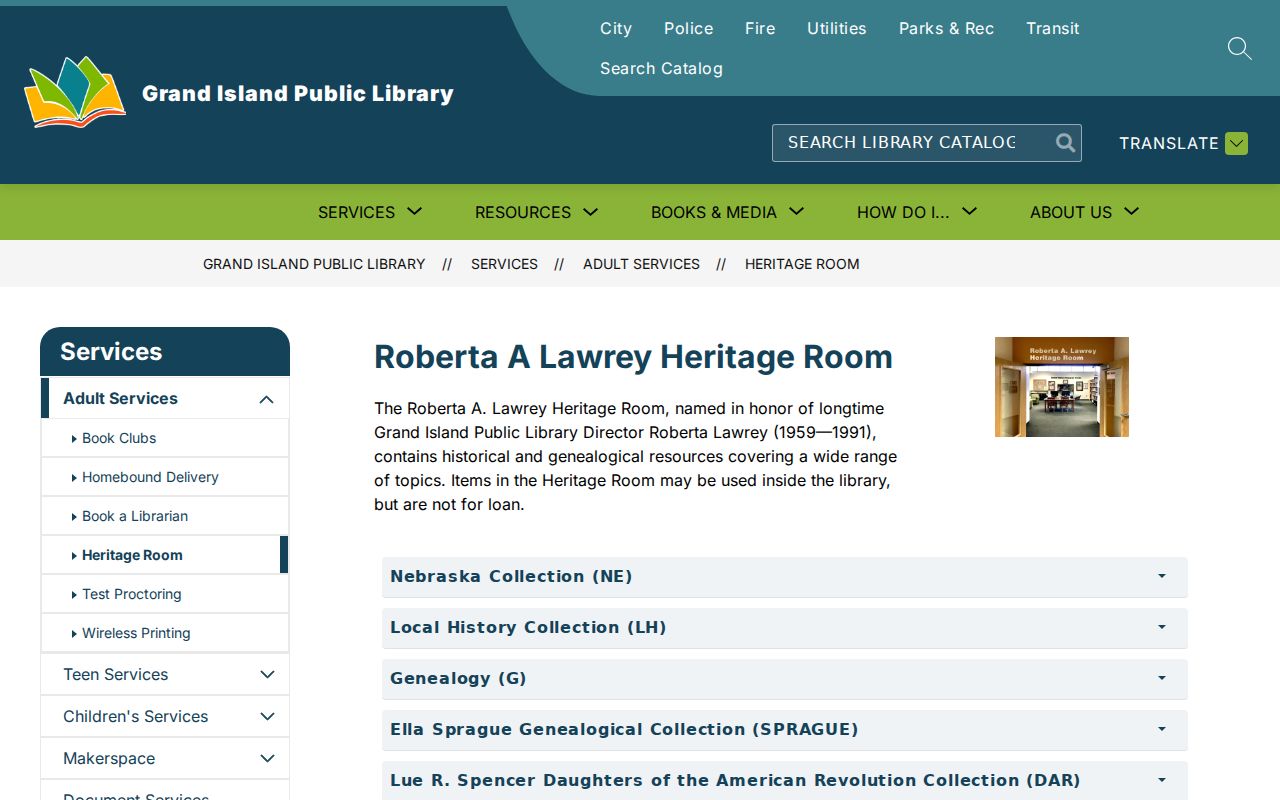
The Grand Island Public Library Heritage Room is the primary local shelf for history and genealogy. Its in-library materials include Nebraska and local history, genealogy, special collections, microfilm, newspapers, and digital databases. The room has Grand Island Daily Independent microfilm, three microfilm readers, and volunteer help for obituary, wedding, birth, and death announcements when an exact date is supplied. Materials are used in the library and do not circulate.
The library reports current hours of Monday and Tuesday, 9 a.m. to 8 p.m.; Wednesday and Thursday, 9 a.m. to 6 p.m.; Friday and Saturday, 9 a.m. to 5 p.m.; and Sunday, 1 to 5 p.m. Verify hours before a visit. First- and third-Friday genealogy help is another local lead. The Hall County Newspaper Digitization Project supplies free searchable newspapers, but title ranges can conflict between the project's pages. Cite the actual scanned issue and date.
The Heritage Room collection page shows the local history and genealogy setting. It is a research desk and collection, not a public listing of current residents.
Use a known street, surname, and year together. That small combination can make old directory, newspaper, and census work much more reliable.
Historical Grand Island Resident Directories
Historical directories put a household at an address in a particular year. They may also include an occupation, spouse, or an owner or renter mark. They do not show a current connection to the address. Official local web pages did not expose a complete Grand Island directory year run, so confirm each title and year with the Heritage Room, Nebraska State Genealogical Society, or FamilySearch catalog rather than repeating an unverified list.
The research did identify a 1993 Grand Island City Directory in the Nebraska State Genealogical Society holdings search and a supplemental 1912 directory lead. The full historical shelf, how entries are read, and careful year-by-year tracing belong with the Grand Island city directories collection page.
Grand Island Maps Through Time
Maps make a useful check between a modern parcel and an older address. Hall County provides 1885, 1890, and 1904 atlas material. The Library of Congress has a 24-sheet 1909 Grand Island Sanborn set. These sources can show a block, street name, building footprint, construction note, or historic property label. None of them is current title evidence.
A careful address timeline starts with the present GIS parcel and legal description, then follows a recorded instrument, atlas plate or Sanborn sheet, 1950 census enumeration district, city-directory entry, and dated newspaper issue. Grand Island's municipal-boundary page lists Ordinance 9938 as effective April 1, 2024. A postal city, ZIP code, parcel jurisdiction, and city limit are separate geographies, so do not treat one as proof of the others.
Grand Island Cemetery Discovery
Grand Island added an interactive cemetery map and name search in May 2026. It can supply a grave location and cemetery record lead, then a dated obituary or newspaper notice can add family context. The city describes Grand Island Cemetery as a 90-acre tract with more than 150 interments annually. A cemetery result still does not prove a present address, family relationship, or current status.
The city parks and cemetery information provides the official context for this local historical source. Check the cemetery office or a primary obituary record when a memorial detail matters.